
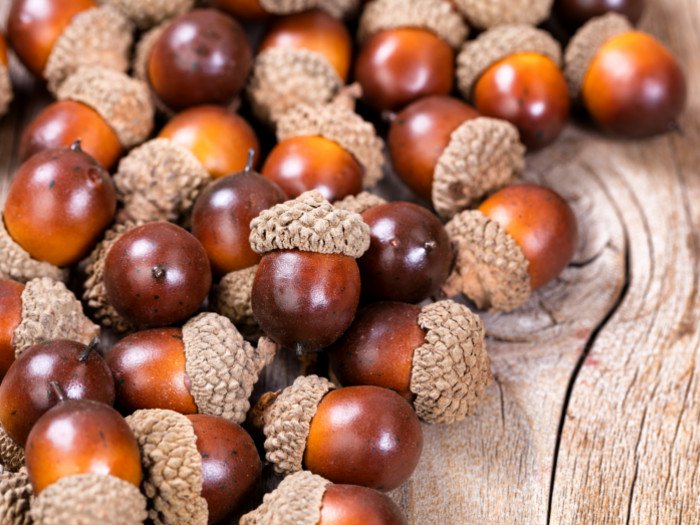
Image courtesy of OrganicFacts.net
Acorns look delicious, don’t they? They’re so smooth and appealing in their cute little “cupules” (hats). They are full of nutrition, but they’re also full of bitter, astringent tannins. These are compounds that make raw acorns distasteful and hard to digest. However, people all over the planet, from California to Japan and everywhere in between (yes, including Europe), have eaten acorns as a staple food for millennia. The key to unlocking acorn nourishment is to remove the tannins. We’ll show you how to process acorns for food so you can get to foraging this fall.
So can you eat acorns? Absolutely—but only after preparing them properly. This guide explains how to make acorns edible, from identifying species to cooking with acorn flour.
Ready to take a class? Check out our foraging classes and herbal workshops.
What Kind of Trees Do Acorns Grow On?
All acorns grow on oak trees. Oaks are widespread across North America, Europe, and parts of Asia. In North America alone, you’ll find dozens of oak species that drop edible acorns. These trees can be found in forests, urban parks, backyards, and along roadsides. Identifying which type of oak you’re harvesting from—such as red oak or white oak—can help you predict how astringent the acorns will be and how best to process them.
What Kinds of Acorns Are Edible?
All kinds of acorns are edible. However, they do vary greatly in size and nutritional components, including bitter tannins. Throughout the world, there are more than 500 species of oaks, with the highest concentration in North America. Correspondingly, there is great diversity in the qualities of acorns to be found. The majority of oaks can be roughly categorized into two groups: white oaks and red oaks. The acorns from trees in each of these broad groups share some important characteristics.
Red Oak Acorns
- Take 2 years to mature (but can bear every year, with both mature and immature acorns on the same tree)
- Usually germinate in the spring after falling (don’t germinate right away)
- Are softer when dried
- Shrink less when dried (fresh acorns contain less water)
- 3%–20% Tannin
- 15%–30% Oil
- 3%–8% Protein
White Oak Acorns
- Mature in one year
- Sprout soon after acorn is mature
- Are harder when dried
- Shrink more when dried (fresh acorns contain more water)
- 3%–30%Tannin
- 2%–11% Oil
- 6%–9% Protein
Which Acorns Should You Eat?
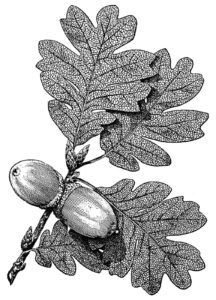
Image courtesy of Villa Quercia
Obviously, gathering and processing larger acorns is easier because there are fewer individuals to pick up and crack open. On the other hand, some smaller acorns are higher in fat and/or protein, making each individual acorn more nutrient dense. Another consideration in eating acorns is how well they store before you get a chance to harvest and process them.
As with most wild foods, a good place to start gathering acorns is outside your back door. Begin by identifying which kinds of oaks you have around, then collect some acorns from each one. As soon as you get the hang of processing acorns, you’ll be able to determine for yourself which ones are your favorites.
Can Humans Eat Acorns Raw?
While acorns are technically edible, humans should not eat them raw. Raw acorns are high in tannins—bitter compounds that can cause digestive upset and interfere with nutrient absorption. Fortunately, once acorns are leached of these tannins, they become a flavorful and nourishing wild food. Indigenous cultures across the globe developed processing techniques to safely incorporate acorns into their diets, and today we can still use these time-tested methods.
Nutritional Value of Acorns
What do acorns taste like? Once leached of tannins, they take on a rich, nutty, slightly sweet flavor reminiscent of chestnuts or hazelnuts. The taste can vary depending on the type of oak tree they come from.
Acorns are a nutritious food. In fact, all kinds of acorns contain contain appreciable amounts of the three macronutrients: carbohydrate, fat and protein – plus the essential mineral calcium and other minerals to boot. However, the specific levels of these nutrients vary quite a bit from acorn to acorn.
These gifts from the trees can be considered a staple crop, as they’re able to provide some serious fuel for mammals like us. In fact, the protein in the acorns is “complete,” meaning that it contains all 9 of the amino acids essential for human nutrition. Depending on the kind of acorn, it can play the role of a whole grain, bean or nut in the diet. Meaning that some are more carbohydrate-rich like a grain, some are higher in protein like a bean, and others are more concentrated in oils like a nut.
How to Process Acorns
So, now you’re gotten excited about eating acorns, you’ve gone out and found a great oak tree and you’ve gathered some (or are waiting for them to fall)…what next? First, look through your harvest for rotten or buggy individuals. Most of these will have an off color, dark spot or insect exit hole. Then, you’ve got to get rid of the shells and those yucky tannins. Here are the steps:
- Dry your acorns – optional, but recommended
- Crack and remove shells
- Remove “testas” (papery seed coverings) – optional
- Grind your acorns into a meal or flour
- Leach out tannins with water
- Make dry meal or flour, or use right away
Want to learn how to process acorns in-person? Check out our foraging classes and herbal workshops!
Drying, Cracking, and Removing Shells and Testas
Fresh acorns do not keep and are highly susceptible to infestations by bugs. If you aren’t going to process your acorns right away, it’s best to dry them for storage. Drying acorns has some other benefits too, even if you are able to attend to them right away. It’s easier to crack dried acorns, as well as to grind them.
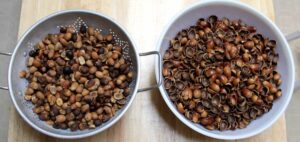
Image courtesy of Oak Spring Garden Foundation
Whether your acorns are fresh or dried, you’ll need to get rid of their shells. To do this, crack them and pick the shell bits off, or winnow with water. If you’ve got just a few acorns, you can use a hammer to crack each shell and then remove it by hand. On the other hand, if you’ve gathered a significant amount, you can put them all in a sack and pound them gently with a wooden mallet, or try putting them through a grain mill that is set very wide. Then, put the acorns, cracked shells and all, in a bucket of water and agitate until the shells float. Next, pour off the shells and strain out the naked acorns.
It’s up to you whether or not to remove the testas (papery seed coverings). Some people do, and some don’t. Depending on the kind of acorn you’ve got, the testa may be extremely high in tannins, or not so much. In addition, some are tightly bound, and others come off more easily. A good way to get most of them off is again to dunk your acorns in a bucket of water and agitate them with your hands. The testas will float and can be poured off.
Learn More Ways to Enjoy Mother Nature!
Wildcrafted Apothecary™ Training
The Nourishing Kitchen Retreat
Seasonal Land-Based Living Handbook
Grinding and Leaching Out Tannins from Acorns
Wondering how to make flour from acorns? The process involves drying, shelling, grinding, and leaching out the tannins before you’re left with a flavorful, nutrient-dense flour that can be used in baking or cooking.
If you read about processing whole acorns to remove tannins, don’t believe it! Acorns must be ground in order to effectively remove their tannins. To do this, use a flour or grain mill, or, in the absence of such a specialized tool, a blender or food processor can work.
Once you’ve got acorn meal or flour, it’s time to leach out those tannins. We prefer cold-leached acorn flour, so that’s what we’re going to describe. Basically, what you’re trying to do is percolate water through your ground-up acorns so that it carries away the water-soluble tannins. This leaves most of the tasty nutrition behind for you to enjoy.
You’ll need a cloth or sack of a very fine mesh. Paint-strainer bags (available at any hardware store) will work, but are made of synthetic material and don’t have a super-fine mesh; they can be doubled-up. Real cheesecloth is another good option, which is made of cotton. This usually must be ordered from a speciality store, as grocery store cheesecloth has a loose weave. Even an old (clean) T-shirt can work.
If you’ve got a stream or creek nearby, you can affix your sack of ground acorns to a tree or heavy rock (so it doesn’t get carried downstream) and allow the flowing water to carry away the tannins. Alternatively, you can line a colander with your cloth or sack and place it in the sink beneath a very gentle flow of water (just beyond a drip, not a strong stream).
How long it takes to leach out the tannins will depend on the kind of acorns you’ve got and how much tannin they had to begin with. Also, more coarsely ground acorns will take longer to leach. Fortunately, your taste buds will let you know when the tannins have all fled. Fully leached acorns do not taste bitter or astringent. The process can take several days.
Frequently Asked Questions About Eating Acorns
Yes—acorns from all oak species are technically edible for humans, but they’re not equally pleasant (or equally quick) to process. The main difference is tannin content, which creates bitterness and can irritate your digestive system if it isn’t removed. White oak group acorns are often lower in tannins, so they tend to taste sweeter and usually require less leaching. Red oak group acorns commonly contain more tannins, which means they’re more bitter and typically take longer to leach thoroughly. Individual trees can vary a lot too, so it’s worth learning your local oaks and doing a small “taste test” of the leaching water or meal as you go. The good news: with proper processing, even very tannic acorns can become a delicious, versatile staple food.
Preparing acorns is a multi-step process because you’re turning a wild seed into a safe, palatable ingredient. Most methods follow the same general flow: collect sound acorns, dry them (or freeze for storage), crack and shell them, then grind or chop them before leaching out the tannins. Leaching is the essential step—it removes the bitter compounds and makes the acorns easier on your stomach. You can leach with cold water (slower, but it tends to preserve more starch and helps the flour bind better for baking) or hot water (faster, often great when you’re making a “meal” for immediate cooking). Either way, you’re changing the water repeatedly until the acorn meal tastes mild rather than bitter. After leaching, you’ll dry the meal again and store it, or cook it right away as a porridge, thickener, or baking ingredient.
No—raw acorns aren’t a safe snack in the way that, say, a hazelnut might be. Unprocessed acorns contain tannins that can cause intense bitterness and may lead to digestive upset, nausea, or stomach irritation if you eat enough of them. Even if you find an acorn that tastes “not that bitter,” it can still be hard on your system without leaching. Proper preparation—especially leaching—is what turns acorns from a survival food into a genuinely enjoyable one. If you’re curious while foraging, it’s fine to nibble a tiny bit to get a sense of tannin levels, but treat that as a tasting exercise, not eating.
Once properly leached, acorns have a mild, nutty flavor that many people compare to chestnuts—earthy, slightly sweet, and more starchy than oily. The exact taste depends on the oak species and how thoroughly they were leached. Some acorn flours come out gently sweet and aromatic, while others are neutral and work more like a hearty “base” flour. Texture matters too: acorn meal can feel creamy in porridges, while finely ground acorn flour adds a soft, rich quality to baked goods. If acorns still taste bitter or leave a drying sensation in your mouth, they likely need more leaching.
Acorn flour is surprisingly versatile, especially once you think of it as a starchy, nutty flour rather than a direct 1:1 substitute for wheat. It’s excellent in pancakes, muffins, quick breads, and cookies, and it can also be cooked into porridges, dumplings, or used as a thickener for soups and stews. Because acorn flour has no gluten, many bakers use it as part of a blend—often mixing it with wheat flour (or other gluten-free flours) for better structure. It can also be fairly absorbent, so recipes may need a bit more liquid or fat to keep baked goods tender. Start by replacing about 10–30% of the flour in a familiar recipe, then adjust from there as you learn the flavor and how it behaves in your kitchen.
Cooking with Acorns
Hooray! You’ve done what millions of humans have done over the course of many centuries: You’ve unlocked the amazing nutrition and delicious flavor of acorns. Now it’s time to eat. Well, if you’re not ready to cook up your acorn meal right away, it’s best to dry it for storage.

Photo courtesy of Amber Swaim, acorn chef extraordinaire
Cooking with your acorns will take a little experimentation. A good place to start is by making a simple porridge. From there, you can branch out into flatbreads and even cookies and cakes. Acorn flour tends to be on the dry side and absorbs liquid in recipes. Keep that in mind, and add a bit more moisture than you would if you were using a grain or other nut flour. Blending acorns with almond and/or hazelnut flour is a winning combo, both nutritionally and for the taste buds.
Cultivate Your Foraging Skills!
Curious to learn more about wild foods, foraging, and seasonal eating? Check out our foraging classes and herbal workshops to explore even more ways to connect with nature and nourish your body.
 On Facebook
 On Instagram