
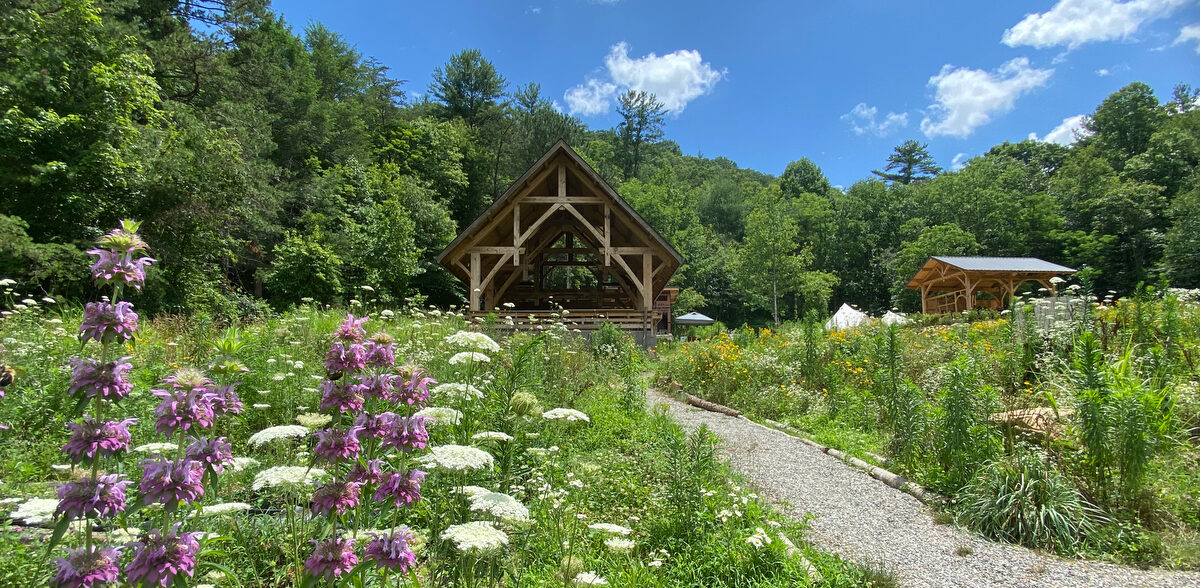
Wild Abundance is more than a school. It’s a living endeavor to create the kind of world we want to inhabit.
Here, we strive to honor the generosity of the living land, and to sustain ourselves in reverent reciprocity with everything that makes our lives possible.
Our campuses are nestled in the verdant folds of the ancient mountains of Shaconage (Sha-Kon-O-Hey), the ‘Land of Blue Smoke’ and the tribal lands of the Cherokee. This region, also well-known as part of the Southern Appalachians, is one of the most biologically diverse ecosystems on the planet. Both of our campuses are located within an easy 25-30 minute drive of Asheville, NC.
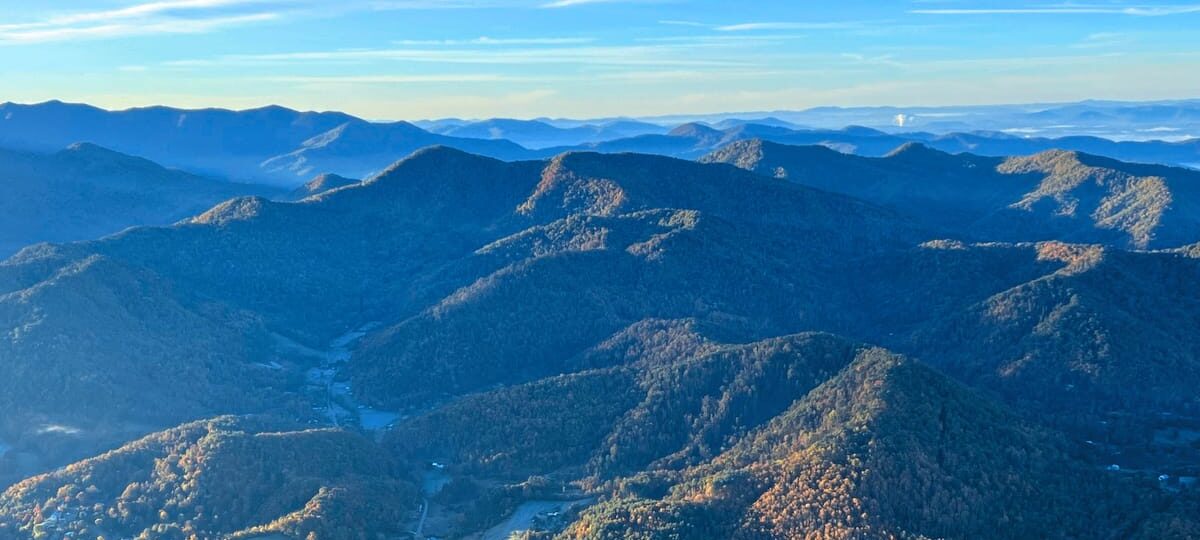
Read our Land Acknowledgement.
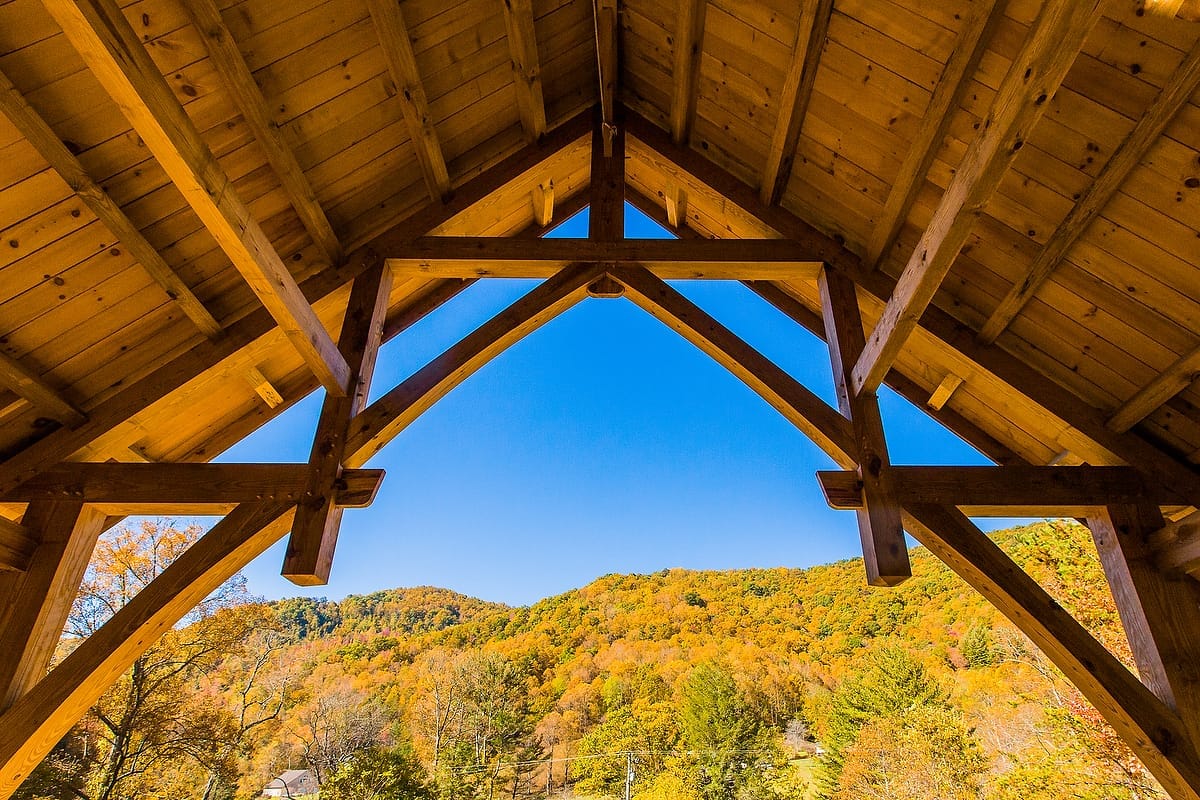
Get to know our beautiful campuses near Asheville, NC
All in-person classes take place safely outdoors, with appropriate shelter for shade and inclement weather.
We’re fortunate to be able to provide beautiful, functional, and natural settings for all of our classes. The experience is a bit like being at summer camp, but with an adult twist.
Our classes are primarily taught at our two unique campuses—Paint Fork and Sanford Way. Because the subjects we teach require various types of infrastructure, we pair classes with the most appropriate location. Therefore, where you learn will depend on what you come to study.
At both campuses, you’ll have access to clean, potable hot and cold running water, dry space in case of rain, an outdoor kitchen for preparing food, clean and inviting permitted outhouses, and lots of inspiration and beauty. Our Timber Framing Workshop and, on occasion, our Tiny House Building Workshop, may be taught at satellite locations. More on this below.
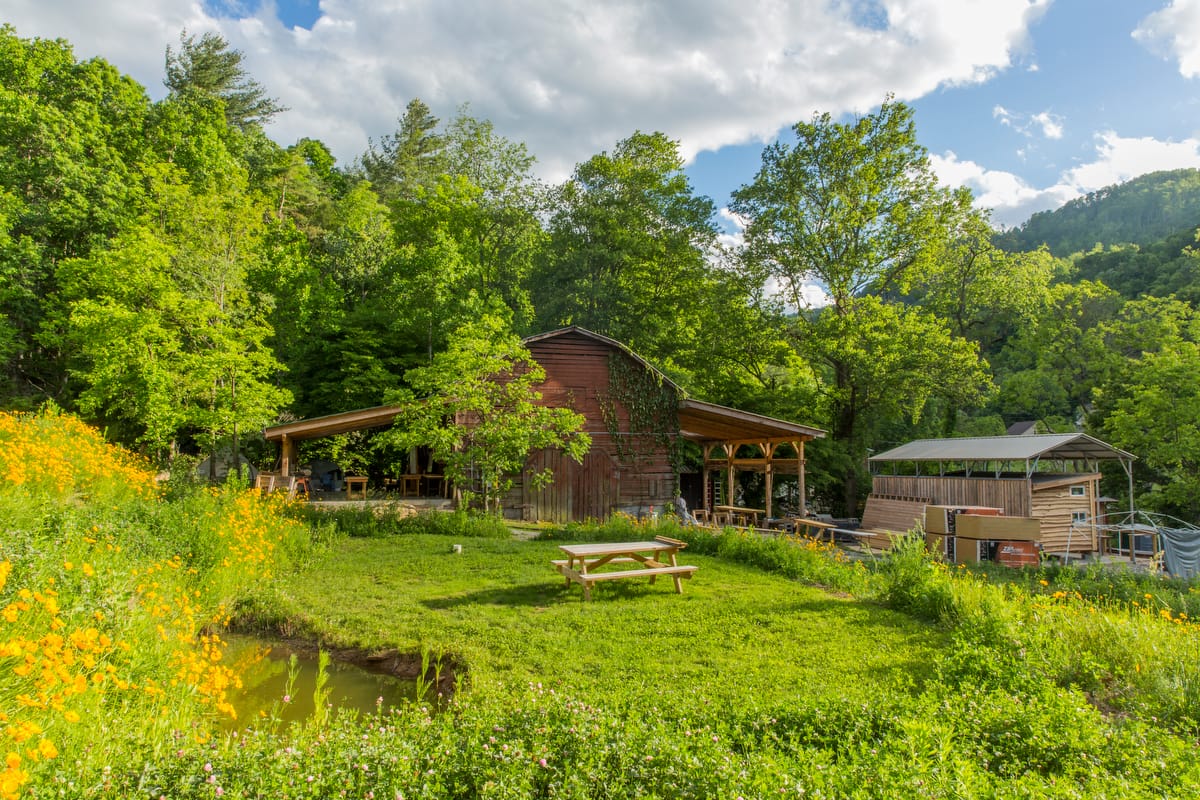
The Paint Fork Campus
Paint Fork is our newest campus and home to most of our carpentry and building classes, including Women’s Basic Carpentry, the Tiny House Building Workshop, and the Handy Homeowner Bootcamp. We also host our Nourishing Kitchen Retreat there in our beautiful timber-framed outdoor kitchen.
As our offerings have widened, we’ve been fortunate to expand into more space to host our growing community. In May of 2022, we established this beautiful creekside property as a primitive camp, hosting students, staff, and instructors.
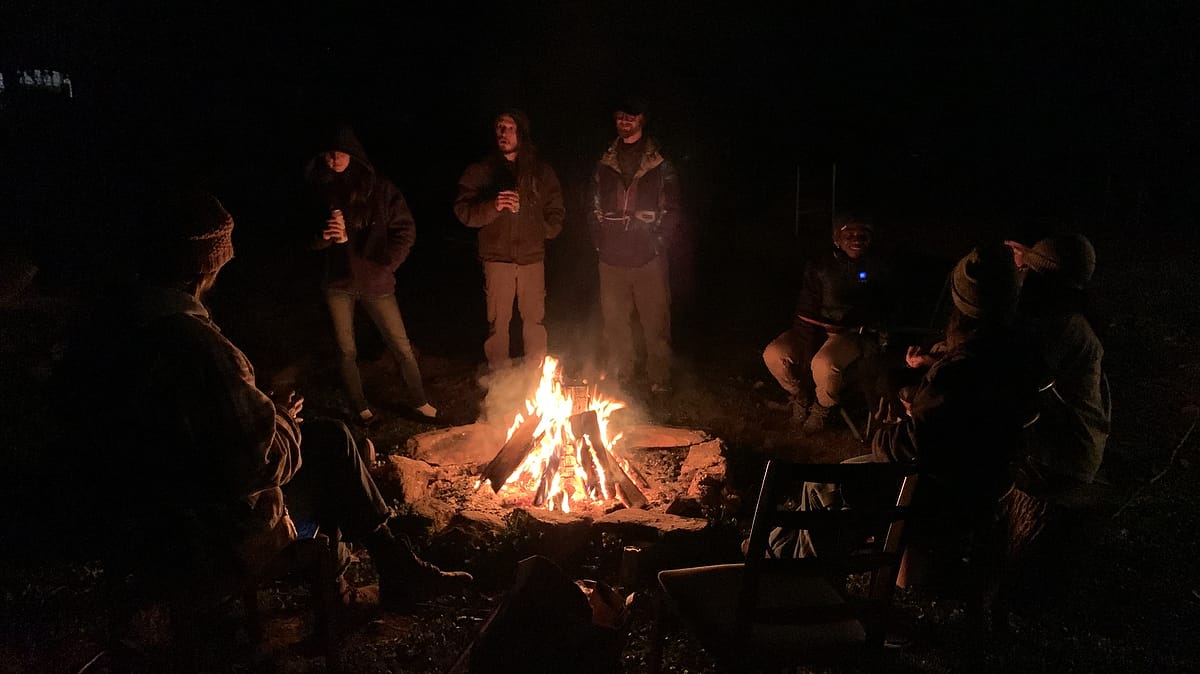
The Paint Fork campus is a bustling creekside landscape with gorgeous mountain views, a breathtaking timber-framed pavilion classroom, and primitive camp structures for learning carpentry and building in all weather. The campus features permaculture gardens, a swimming pond, wood-fired sauna, outdoor kitchen, a number of camping + sleeping options, and fire pits for leisure and socializing. It’s brimming with energy and beauty!
Note that a couple of wonderful and well-trusted folks live at the Paint Fork Campus. Therefore, you’ll likely see them around! At times, multiple classes will be taking place at the same time—you may have the chance to interact with students from other workshops.
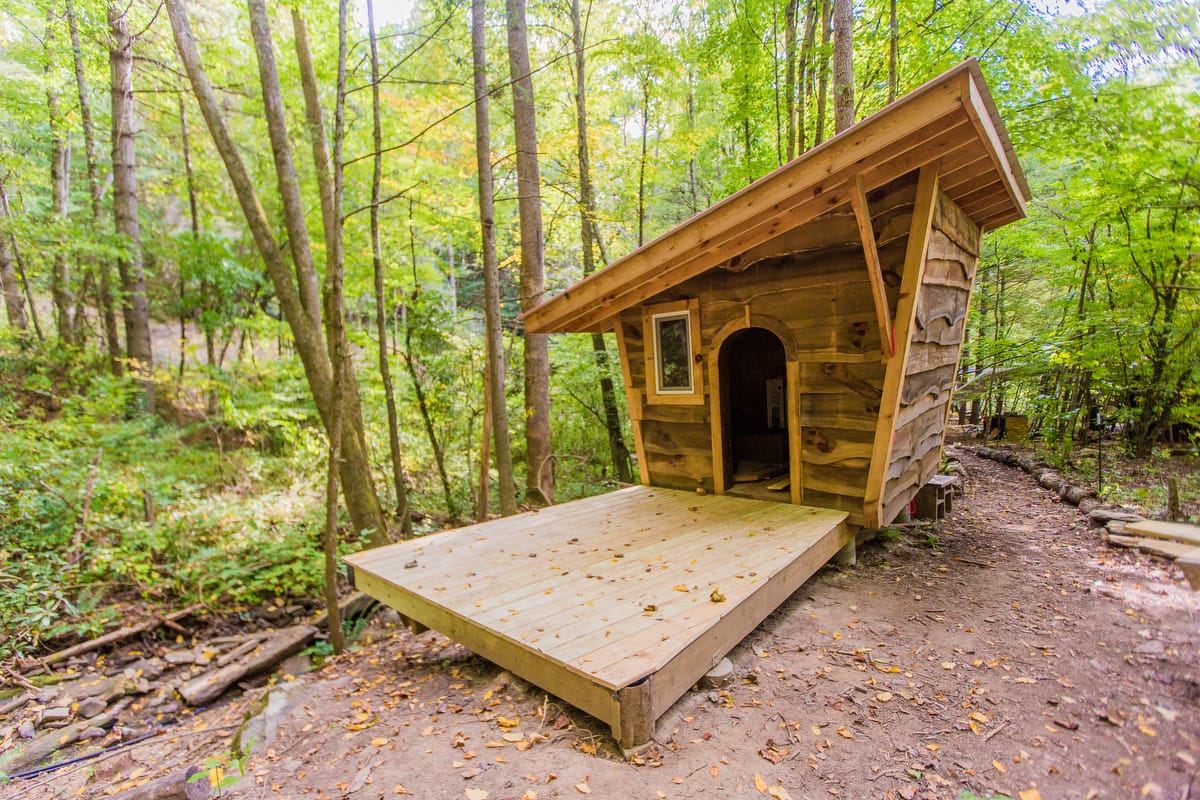
“The immersive experience at Wild Abundance is a glimpse into the good life: where we trust ourselves, lean into our human gifts, and collaborate with the beings around us to build the more beautiful world our hearts know is possible.” —Cedar, Permaculture Design Course student
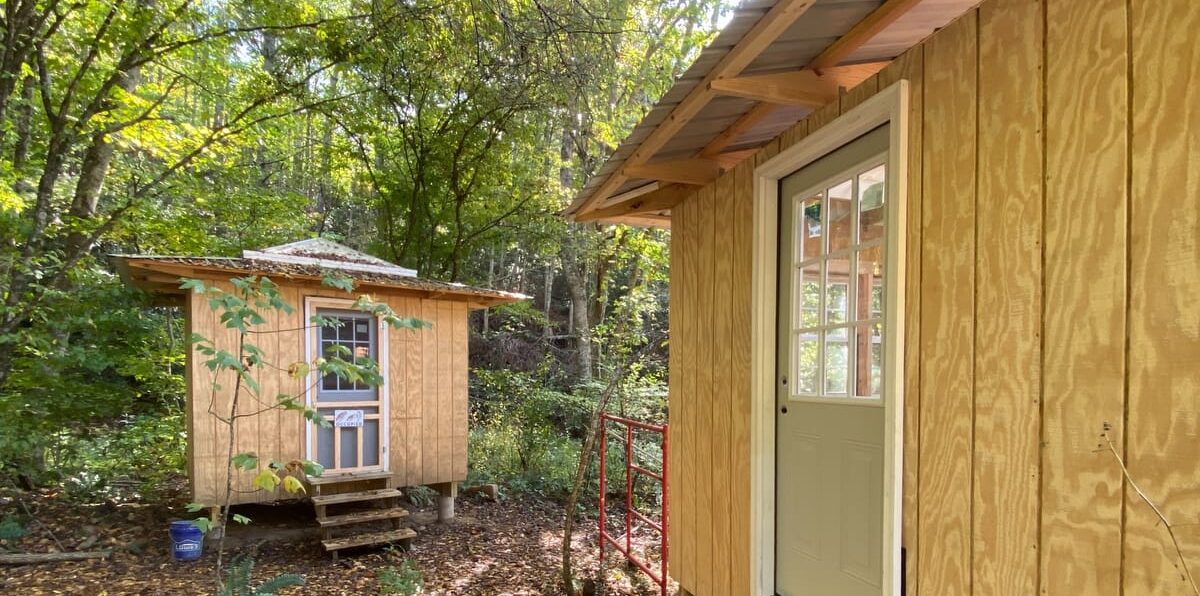
The Sanford Way Campus
Wild Abundance’s original home campus on Sanford Way in Barnardsville, NC boasts many gorgeous and functional features, all crafted lovingly by our staff and community of students, friends, and neighbors.
The campus features a bountiful and beautiful leaf-shaped organic permaculture garden, a food forest that includes delectable perennial beds, a log cabin built with trees from our own growing forest, a cob oven, an outdoor classroom + wood shop topped with solar panels, and a stunning wattle and daub outdoor kitchen + classroom featuring a handmade sun motif sculpted from clay by the hands of our students.
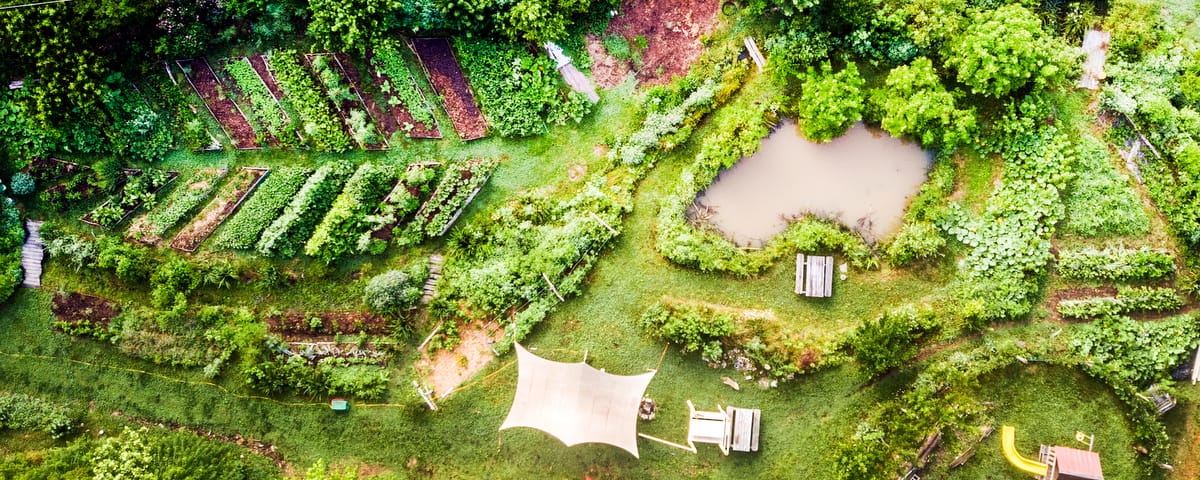
This campus is cozily tucked within a small neighborhood on a winding gravel road. It’s the year-round home to our founder, Natalie Bogwalker and her daughter, Hazel. It takes about 25 minutes to reach Sanford Way from Asheville, NC.
We host our Women’s Rewilding Retreat, Wildcrafted Apothecary Class, and several days of our Permaculture Design Course at Sanford Way, with portions of each class taking place in the field. Students in classes hosted at the Sanford Way Campus are welcome to camp onsite and use the facilities during their class.
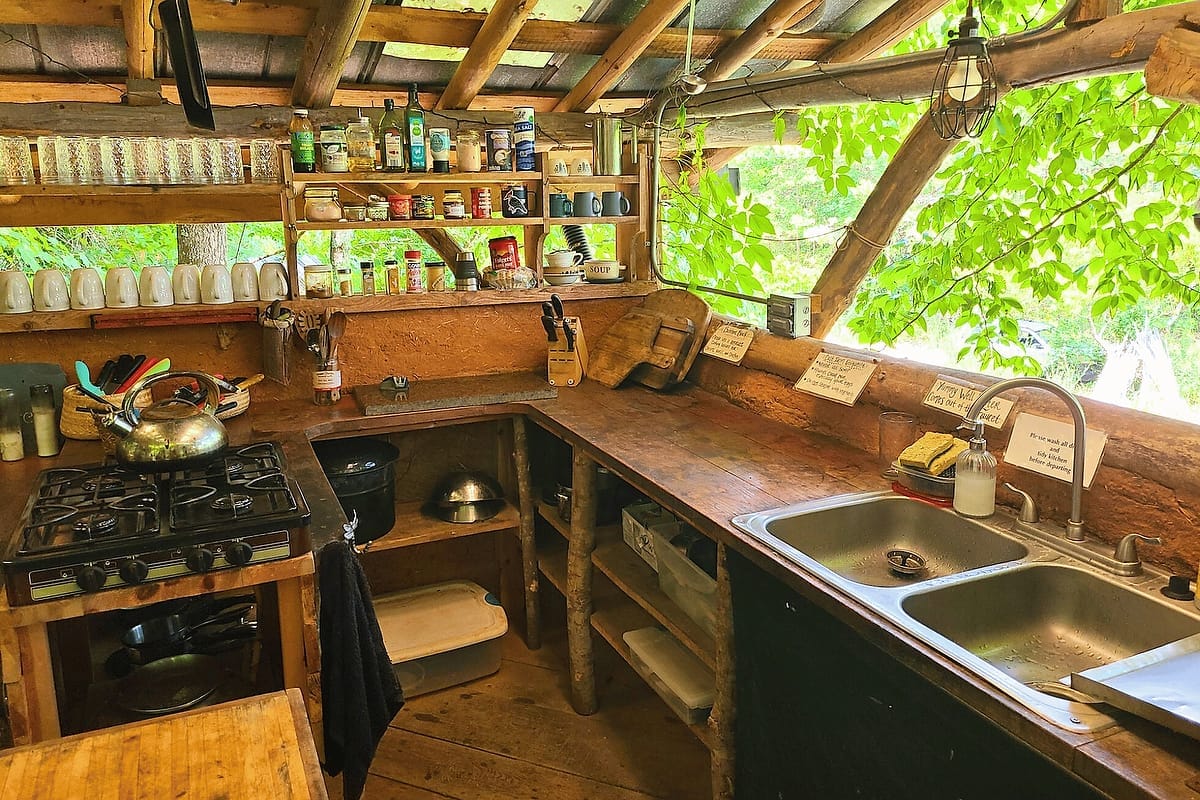
The Nanostead Satellite Campus
This is the workshop and business-home of one of our key instructors for the Tiny House Building Workshop. It’s a half-acre facility with a 4,000 square foot covered workshop right in downtown Marshall, NC. If you’ve never been to Marshall, it’s a vibrant and picturesque town located alongside the French Broad River. There are numerous restaurants and art galleries, as well as a natural foods store and coffee shop. It’s a sweet destination for learning!
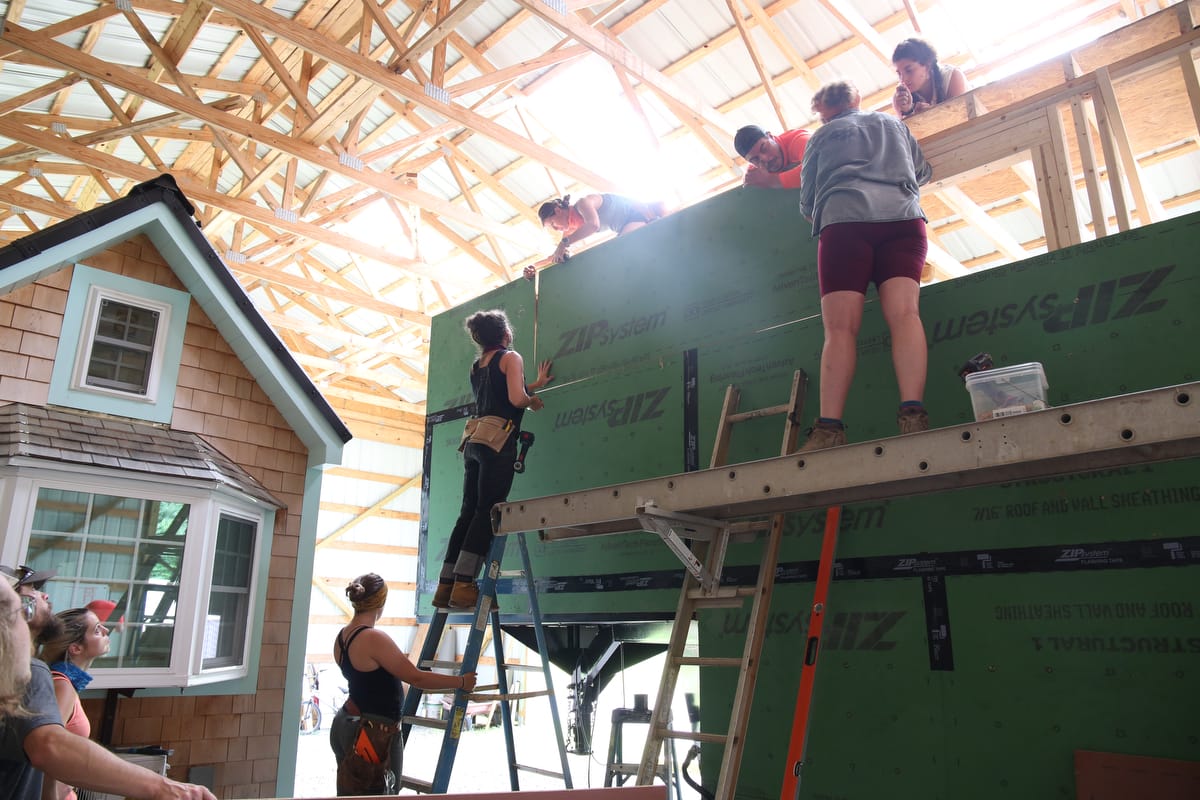
Unlike our other campuses, Nanostead is not a rural homestead or farm, but rather a bustling tiny house workshop, within walking distance to local restaurants, bars, and the other artsy attractions of quaint Marshall, NC.
If you take one of our tiny house courses, you will be hosted at the Wild Abundance Paint Fork Campus for the first 2.5 days. After that, students are divided into two groups for the remaining time—you have the choice to stay at Paint Fork or learn at Nanostead. Both groups will accomplish a tiny house build; dividing the group simply provides more opportunity for hands-on building experience.
There is no camping available at Nanostead, but tiny house students are welcome to return to the Paint Fork Campus to camp. They are also welcome to reserve other accommodations.
Nanostead is located about 25 minutes from downtown Asheville, and 30 minutes from our Paint Fork campus.
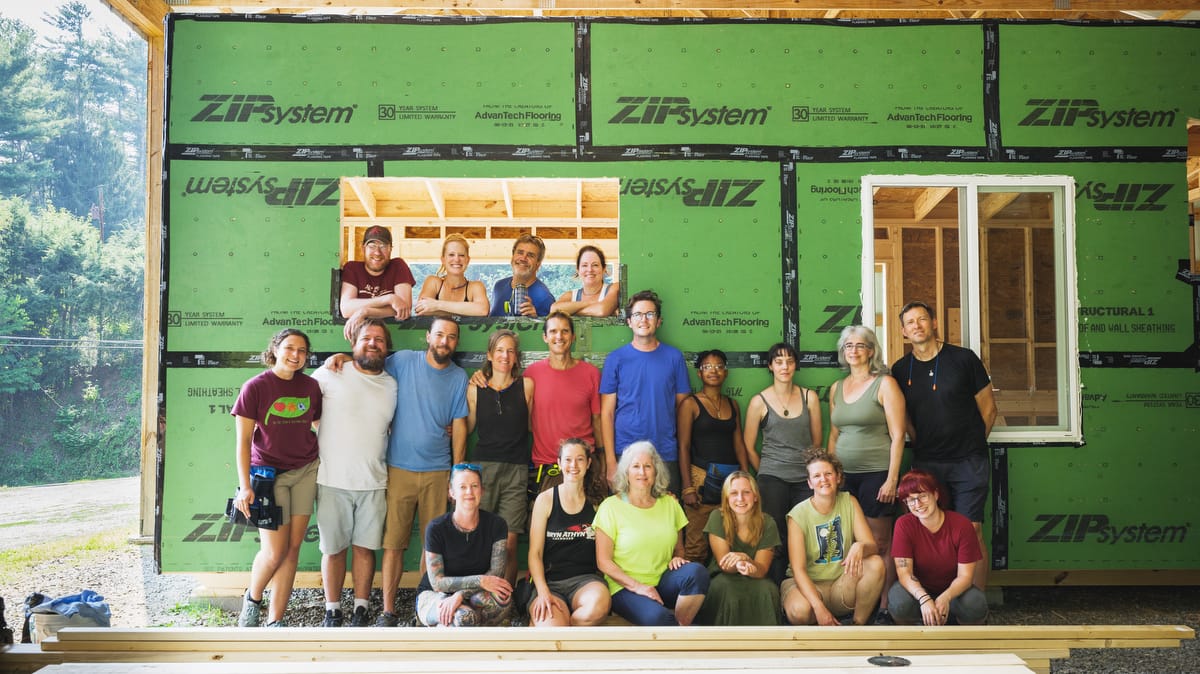
Ivy Creek Timber Frames
This beautiful farm and workshop is home to Brian Snedecker, instructor of our Timber Framing Class. He stewards these 40 acres along with his family, plus their milk cow, many goats and chickens, and a couple of dogs. It’s just down the road from our Sanford Way and Paint Fork campuses in Barnardsville, NC.
This land features a gorgeous 2,000 square foot timber framed barn/workshop where most of the Timber Framing Class takes place.
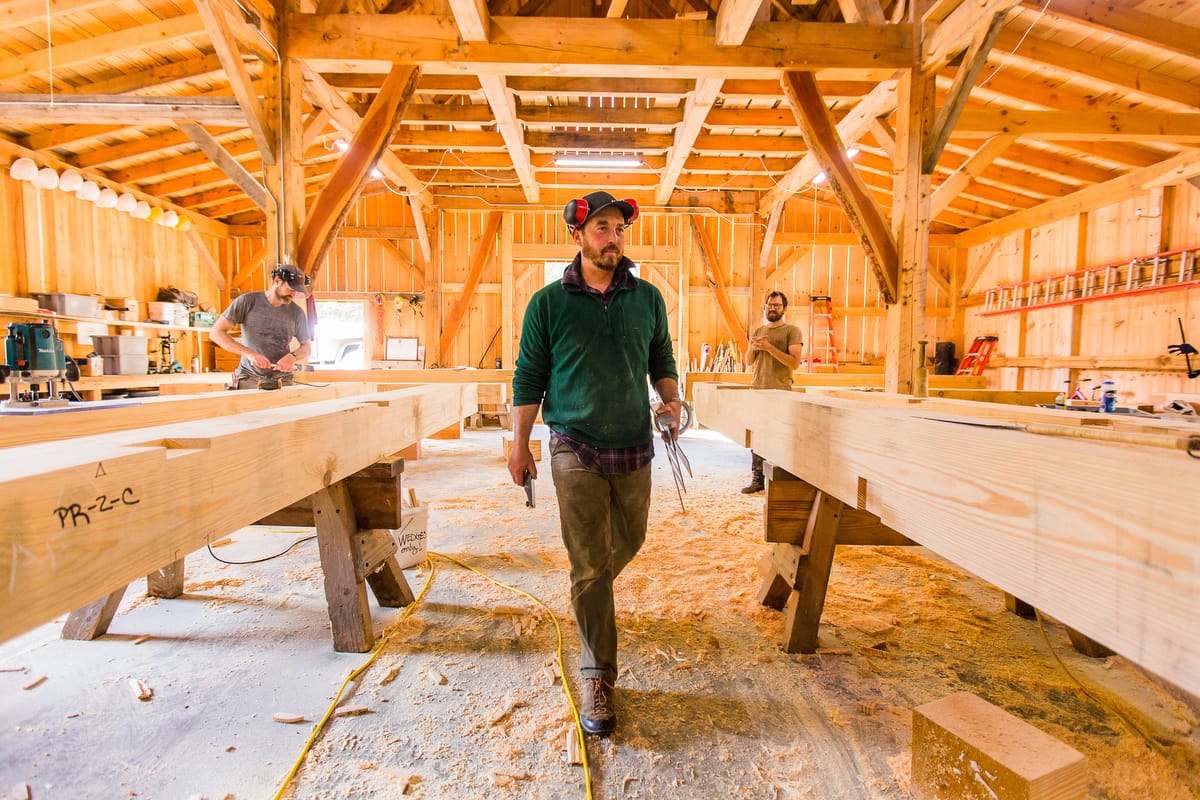
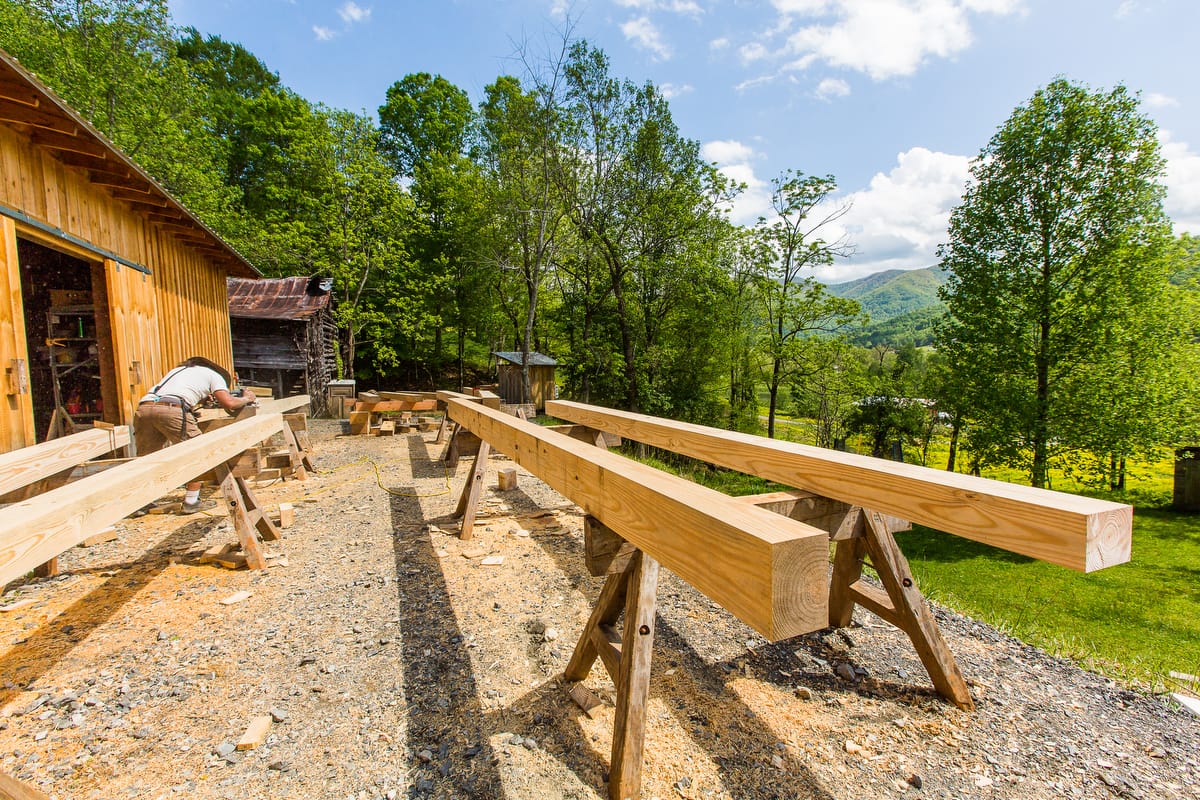
Along with the barn, this campus has a sunny open-air work area with stunning views of the mountains and valleys of this incredible region.
Ivy Creek Timber Frames is about 30 minutes from Downtown Asheville. Camping at Ivy Creek Timber Frames is limited. Students without vehicle access are welcome to camp onsite; those with transportation will camp at the Paint Fork Campus and commute a few miles each day to Ivy Creek Timber Frames.
Earthaven Ecovillage
Home of our Permaculture Design Course
We’re delighted to partner with the School of Integrated Living and Cooperate WNC to collaboratively host our Permaculture Design Course at Earthaven Ecovillage.
This permaculture-based community offers a unique living classroom where students directly engage with regenerative food systems, eco-infrastructure, and the intimate experience of community living.
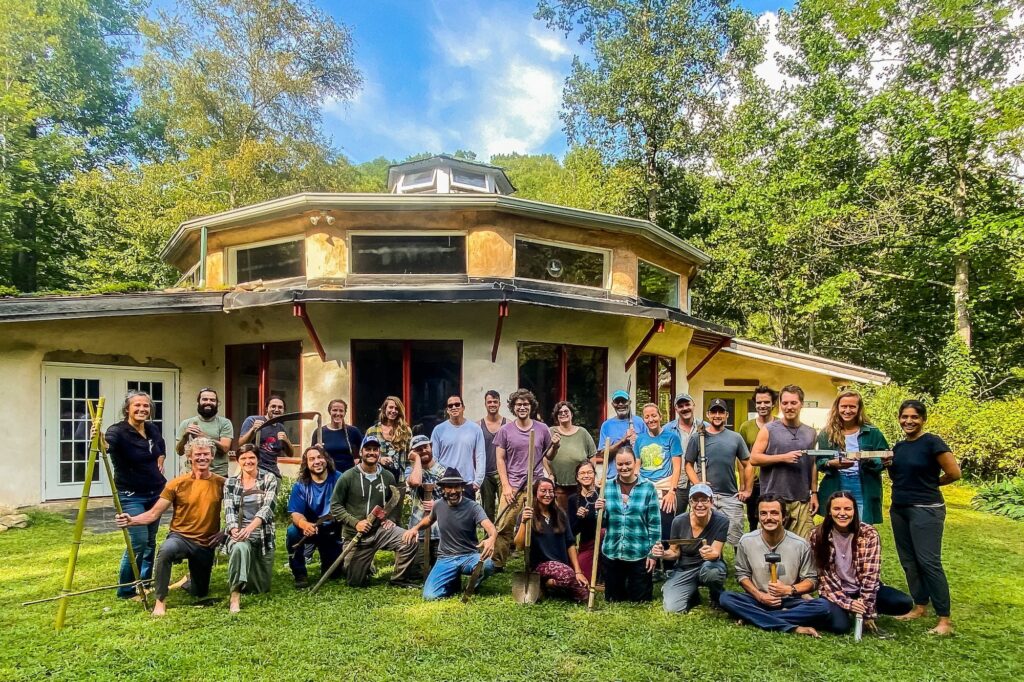
Earthaven is a beautiful and unique 330-acre permaculture-based intentional community about 45 minutes from Asheville, NC that was founded in 1995.
Many of the principles of permaculture are on display in the forests, gardens, fields, and infrastructure at Earthaven. It’s an amazing place to learn about both the techniques and technologies of more sustainable living, along with the human dynamics and systems required when cultivating long-term communities.
Staying and learning at Earthaven is an adventure! Earthaven is off-the-grid, they derive electricity from hydro (water) power, solar (sun) power, or a back-up gasoline-powered generator, and their water from on-land springs and wells.
Classes take place in the community’s beautiful, hand-built Council Hall, as well as under outdoor canopies and in the woods or on farms.
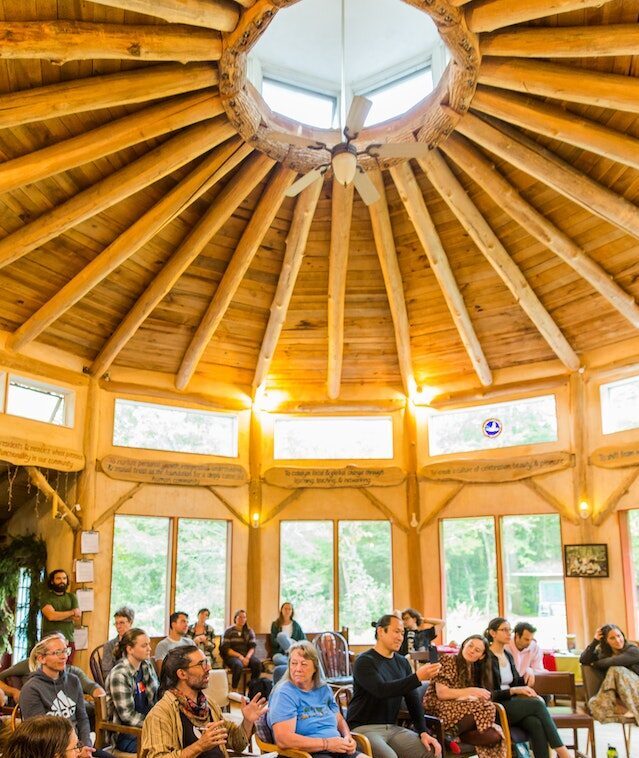
Each of our campus locations provides an opportunity to learn the subject matter, and to witness the various ways that human beings are integrating their lives with the landscape.
Our campuses are unconventional.
At each of our campuses, you’ll see handmade structures that are whimsical, beautiful, and different from your typical home or classroom. We have outdoor showers and permitted outhouses or port-o-johns in lieu of traditional bathrooms (no flush toilets), along with outdoor kitchens. This nod to simpler, more elemental living tends to enhance students’ experiences—it’s refreshing and invigorating to spend time closer to the natural world.
As you explore the campuses, you may find yourself walking along footpaths and up and down rustic steps made of split logs and packed earth, or strolling through the woods. We encourage you to wear sturdy, comfortable shoes in order to navigate the terrain. Additionally, bringing a flashlight or headlamp will be useful if you plan to camp on-site.
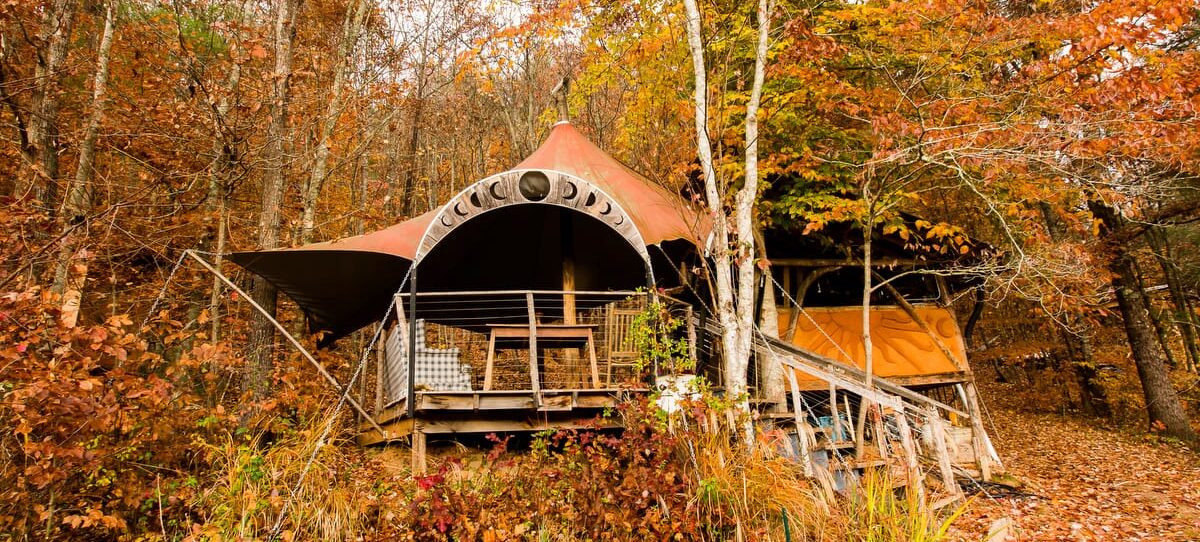
Our students are welcome and encouraged to stay on-site for a fully immersive experience. Campsites are included in tuition for all classes. Most are a short walk from parking areas. In-car camping is also welcome. Each campus is rich with abundant trees from which to hang a hammock. Some paid accommodations are available, too. If you’d like to learn more about these options, please visit our Accommodations & Lodging page.
We try to make classes accessible to students of varying physical abilities. However, it’s important to note that our mountain campuses are not wheelchair accessible and may pose some difficulty to those who are not able-bodied. If you’re unsure about navigating the terrain, please reach out to admin@wildabundance.net.
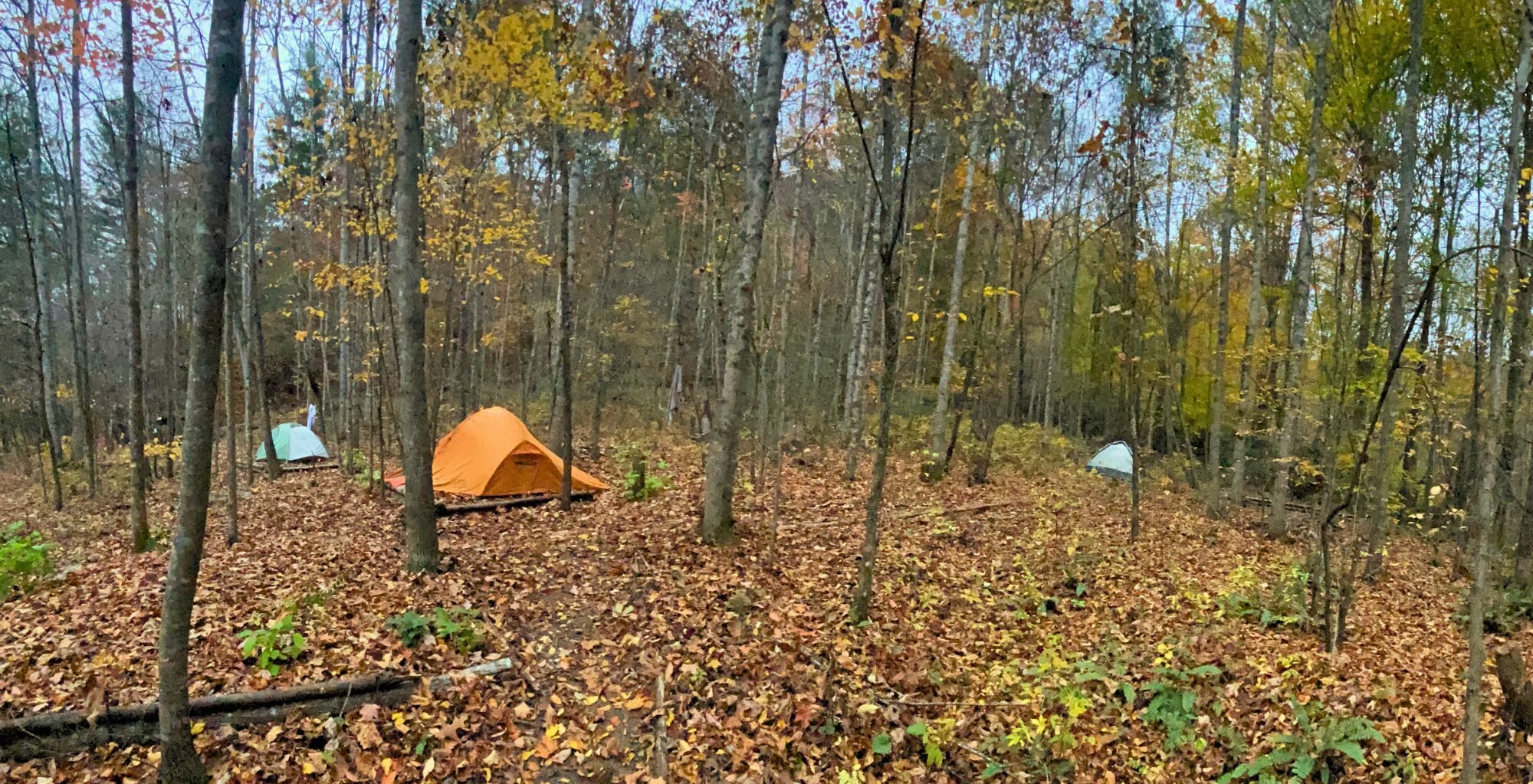
Learning with the landscape
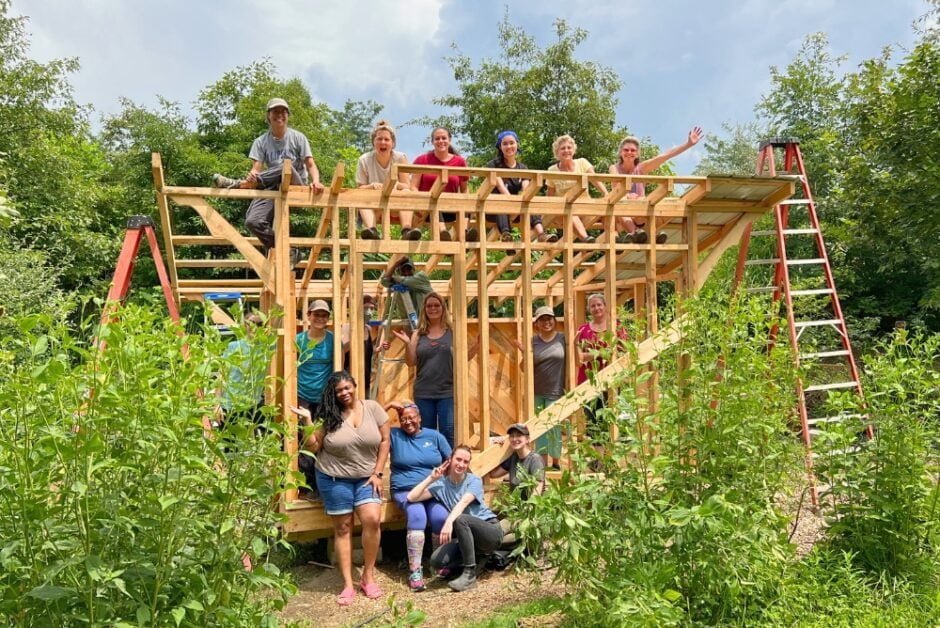
Our land-based living campuses continue to grow, change, and thrive. Indeed, the loving contributions of each and every person who comes here adds to the beauty and richness of the school. We’re grateful to all of the students, friends, staff, and neighbors who share their gifts and love with Wild Abundance.
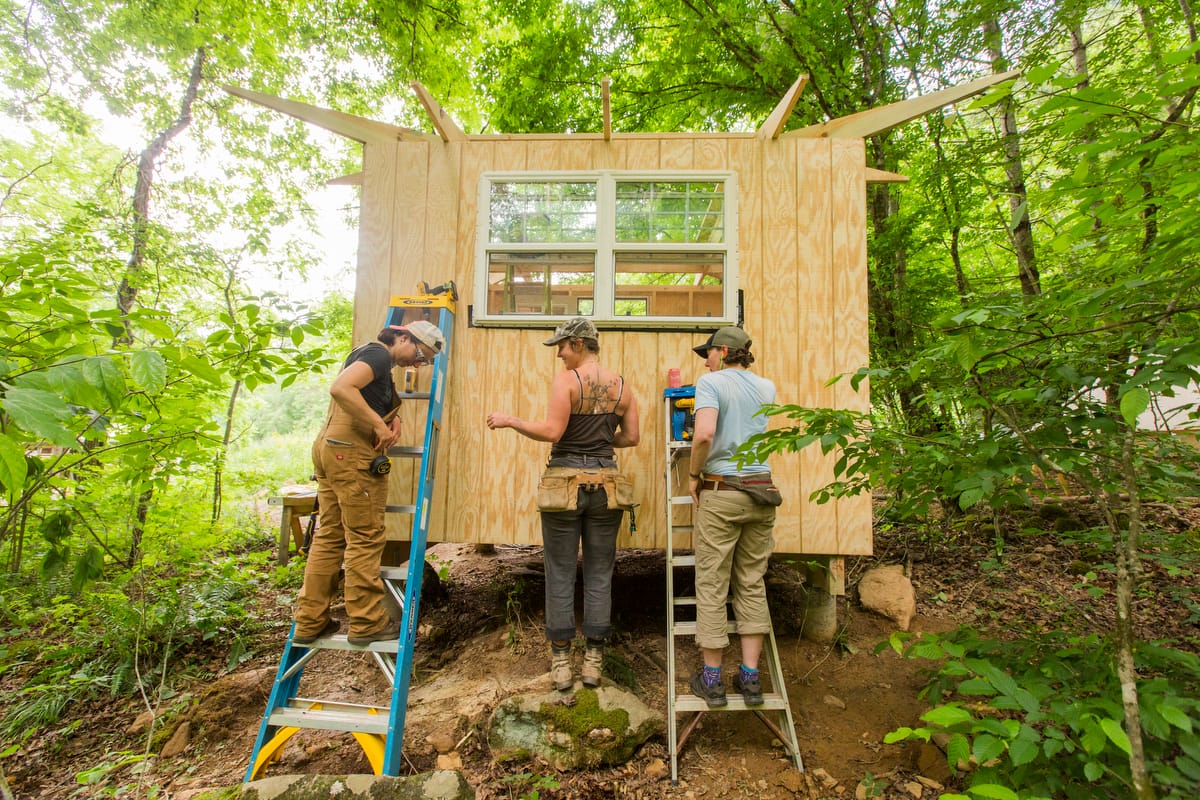
Our hope is that the school will, in turn, change the lives of those who learn and study with us.
We consistently receive feedback from our students that the physical spaces where our classes take place are a significant part of their experience. While it’s possible to teach carpentry, for example, in a sterile-feeling workshop or warehouse, we don’t go that route. Instead, we’ve crafted outdoor classrooms where students can breathe fresh air and witness the beauty of these mountains as they’re learning new skills.
May your experience with us inspire a deep reverence for the sacred and ancient relationship between human beings and the rest of the living Earth.
 On Facebook
 On Instagram